
Opening a Restaurant in Bengaluru: The Licences to Line Up Before You Sign a Lease
The approvals a Bengaluru restaurant, café or bar needs, which ones depend on the building itself, and how to protect yourself in the lease if one is refused.
F&B
How F&B brands in Bengaluru match format to location, from 150 sq ft food-court counters to 3,500 sq ft dining rooms, and how the formats work together.
The question used to be where to open the next restaurant. For most F&B brands in Bengaluru it is now which format to open where. The same brand might run a flagship on a high street, counters in two tech parks and a delivery kitchen in a cheaper back lane, each doing a different job.
Here is how the main formats compare, using sizes from deals we have closed.
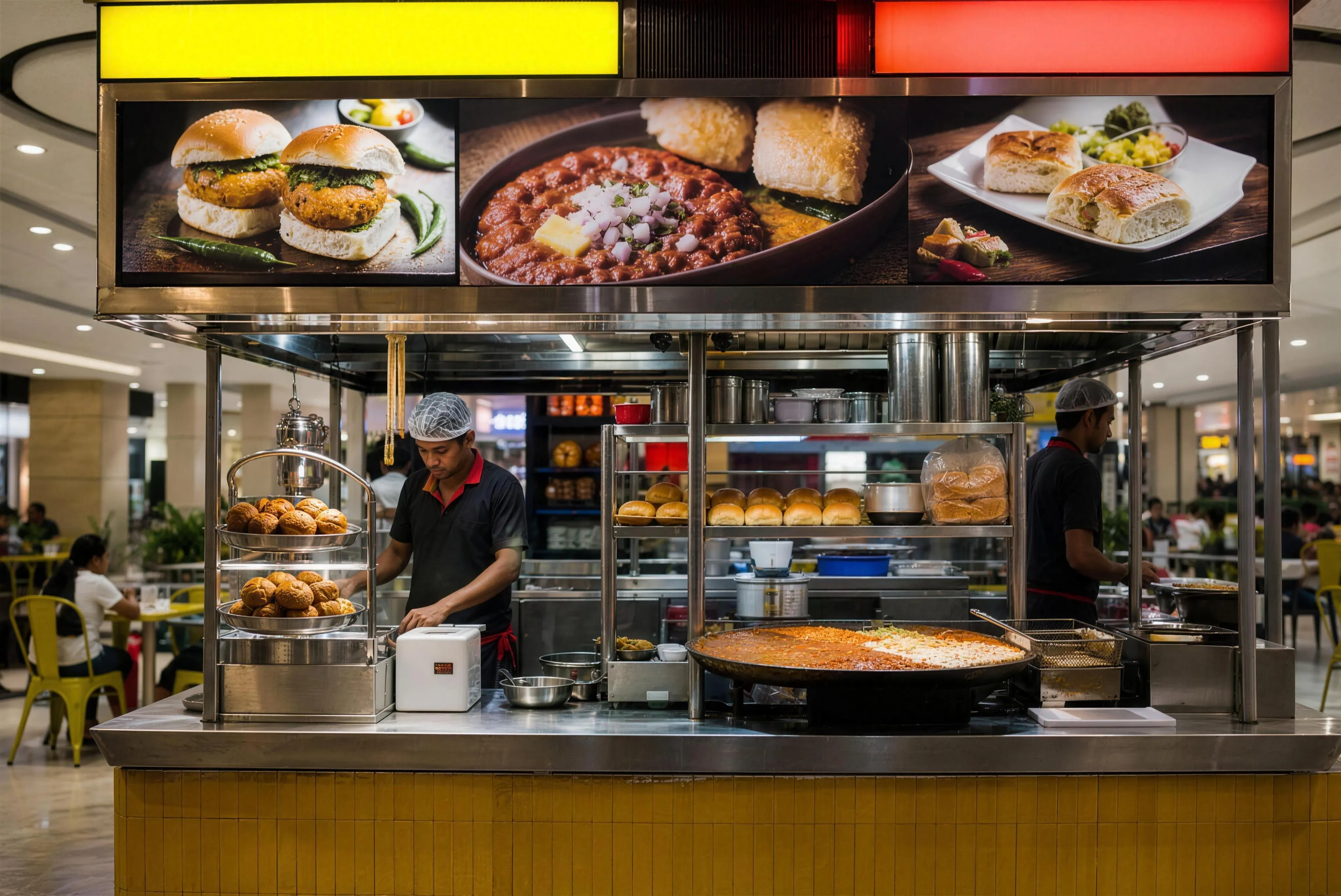
Typical size: 100–300 sq ft. Our smallest recent placement was a 150 sq ft kiosk in JP Nagar.
Where it works: food courts in malls and tech parks, transit points and busy high-street corners.
Why brands choose it: low fit-out cost, high throughput at peak hours and a fast route into a new catchment. A counter near the multiplex exit or the food court entrance can out-trade a far bigger unit.
Watch for: revenue-share rents, strict operating hours, limited storage and a menu that has to be cooked or finished in a very small space.
Typical size: roughly 500–1,500 sq ft.
Where it works: high streets with steady all-day footfall, close to offices and colleges.
Why brands choose it: visible frontage, dine-in plus takeaway and delivery from one kitchen.
Watch for: the occupancy cost. Keep rent and maintenance within roughly 10–15% of what the outlet can realistically turn over.
Typical size: 2,000–4,000 sq ft, sometimes more. One of our recent dining placements was 3,500 sq ft on Indiranagar’s 80 Ft Road.
Where it works: destination streets such as 100 Ft Road, 12th Main, 80 Ft Road and the central business district.
Why brands choose it: brand-building, higher spend per head and, for bars, the evening trade.
Watch for: power, exhaust, parking, and above all licences, which depend on the building as much as on the brand.
Typical size: a small unit away from the main road, chosen for kitchen services rather than frontage.
Where it works: the middle of a dense delivery catchment, where rent is lower and riders can collect easily.
Why brands choose it: reach without frontage rent, and a way to test demand in an area before committing to a storefront.
Watch for: delivery-platform commissions, the absence of walk-in trade and residential neighbours who object to the smell and the riders.
Typical size: whatever the brand story needs.
Where it works: one or two of the city’s most visible addresses.
Why brands choose it: it is marketing as much as a restaurant. It tells customers, franchisees and investors that the brand has arrived.
Watch for: judging it on its own profit alone. A flagship earns its keep through the outlets it supports.
The strongest Bengaluru F&B brands combine formats: one visible flagship, several counters where the footfall is, and delivery kitchens to fill the gaps. Planning the network as a whole, rather than one outlet at a time, avoids new outlets eating each other’s sales.
We place brands across every one of these formats, from 150 sq ft kiosks to 15,000 sq ft leisure venues. Brief the desk with your format and target areas, or browse the spaces we represent.
The approvals a Bengaluru restaurant, café or bar needs, which ones depend on the building itself, and how to protect yourself in the lease if one is refused.
Why F&B brands are the most active tenants on Bengaluru’s high streets, and what a space must offer before a restaurant will sign.